
The Ultimate Guide to a Healthy Smile: Mastering the Art of Flossing

Flossing is one of the most important steps in keeping your gums healthy and your smile clean, but many people are not sure if they are doing it properly. Learn how to floss correctly, how often to do it, and why it matters for preventing cavities, bleeding gums, and gum disease.
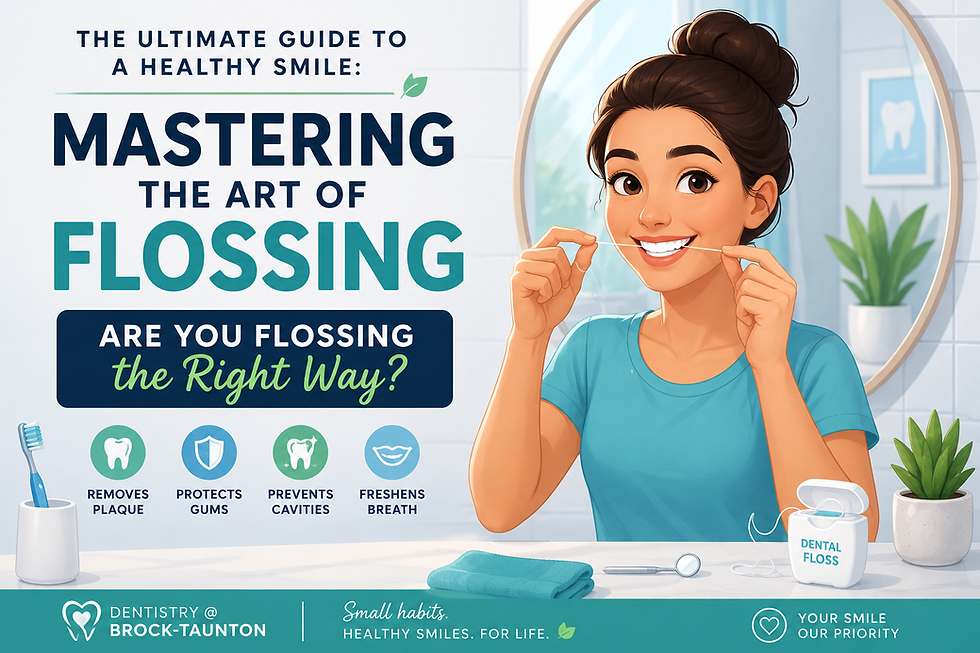
Good oral hygiene is about more than just brushing your teeth. While brushing cleans the surfaces of your teeth, it cannot fully reach the tight spaces between them. That is where flossing becomes essential.
Flossing helps remove plaque, food particles, and bacteria from areas that your toothbrush cannot properly clean. When these areas are missed, plaque can build up and increase the risk of cavities, gum inflammation, bleeding gums, and gum disease.
At Dentistry @ Brock-Taunton, we believe that small daily habits can make a big difference in your long-term oral health. Learning how to floss properly is one of the simplest ways to protect your smile.
Why Is Flossing Important?
Every day, plaque forms on and between your teeth. Plaque is a sticky film of bacteria that can contribute to tooth decay and gum disease if it is not removed regularly.
When plaque stays between the teeth, it can harden into tartar. Once tartar forms, it cannot be removed with brushing or flossing at home. It must be removed professionally during a dental cleaning.
Flossing helps prevent this buildup by cleaning between the teeth before plaque has a chance to harden.
Regular flossing can help:
Reduce plaque between the teeth
Lower the risk of cavities between teeth
Reduce gum inflammation
Help prevent bleeding gums
Improve bad breath caused by trapped food and bacteria
Support healthier gums over time
How Often Should You Floss?
For most patients, flossing once a day is recommended. The most important thing is to make it part of your daily routine.
Many people prefer flossing at night before bed because it removes food and plaque that have built up throughout the day. However, the best time to floss is the time you are most likely to do it consistently.
Flossing once a day, every day, is better than flossing only right before a dental appointment.
Are You Flossing Correctly?
Flossing should not be rushed. The goal is not just to snap the floss between the teeth. The goal is to gently clean the sides of each tooth and slightly below the gumline.
Here is a simple step-by-step guide:
Use about 18 inches of floss.
Wrap most of the floss around your middle fingers, leaving a small section to work with.
Gently slide the floss between two teeth.
Curve the floss into a “C” shape around one tooth.
Move the floss gently up and down along the side of the tooth.
Repeat on the other tooth beside it.
Use a clean section of floss as you move from tooth to tooth.
Avoid forcing or snapping the floss into your gums. This can cause irritation and discomfort.
Why Do My Gums Bleed When I Floss?
Bleeding gums are common, especially if you have not flossed regularly for a while. In many cases, gums bleed because plaque has caused inflammation.
The good news is that with proper daily brushing and flossing, mild gum inflammation may improve over time.
However, bleeding gums should not be ignored. If your gums continue to bleed, feel swollen, or look red and tender, it may be a sign of gingivitis or gum disease. A dental exam and cleaning can help determine what is happening and what treatment is needed.
What If Flossing Feels Difficult?
Some people find traditional floss hard to use, especially if they have tight spaces, braces, bridges, dental implants, or limited hand movement.
Depending on your needs, your dental team may recommend other tools such as:
Floss picks
Interdental brushes
Super floss
Water flossers
Threaders for bridges or orthodontic appliances
The best flossing tool is the one that cleans effectively and that you will actually use every day.
Flossing and Gum Health
Healthy gums are the foundation of a healthy smile. When plaque is not removed from the gumline, it can cause inflammation and infection. Over time, untreated gum disease can affect the gums and bone that support the teeth.
Professional dental cleanings, along with good home care, are important for maintaining gum health. Some patients may need cleanings every six months, while others benefit from a three- or four-month maintenance schedule depending on their oral health.
Your dental team can help recommend the right maintenance interval for you.
Final Thoughts
Flossing may seem like a small step, but it plays a major role in protecting your teeth and gums. When done properly and consistently, flossing helps prevent plaque buildup, cavities, bleeding gums, and gum disease.
If you are unsure whether you are flossing correctly, or if your gums bleed when you brush or floss, our team at Dentistry @ Brock-Taunton is happy to help.
A healthier smile starts with simple daily habits — and flossing is one of the most important ones.


Comments